Arguably, the greatest Fords throughout history are the fast ones. Affordability mixed with compact dimensions, an agile and well-balanced chassis, a powerful engine, and sporty looks that were not a world away from the standard model – all trademarks of a fast Ford.
SGMW latest: Southern Group Happenings: November 2025
But amongst all of the iconic nameplates attached to fast Fords over the years, such as XR, RS, and the later ST badged models, there is one that helped to kick-start its status as a bonafide maker of performance models: the Escort Mexico.
Up to speed, a quick run through the history of the Escort Mexico
Introduced in late 1967, the Mark I Ford Escort replaced the long-running Anglia. It was the first passenger car to come from the newly merged Ford of Europe, with a two-door saloon quickly followed by a four-door variant and a practical estate model. A varied line-up that helped it to quickly become a best-seller in the UK.
Then came the race-spec models. With the Ford works team of the era being practically unbeatable in the British Saloon Car Championship, with the Escort winning the 1968 drivers title. It also became one of the most successful rally cars of the era too, with a stunning victory in the 1970 London to Mexico World Cup Rally, driven by Finland’s Hannu Mikkola and Swedish co-driver Gunnar Palm. A win which gave the marketing men at Ford the idea for a road-going version resulting in the Escort Mexico arriving in showrooms later in the same year.
The Ford UK Escort Mexico – one of the best examples in the UK
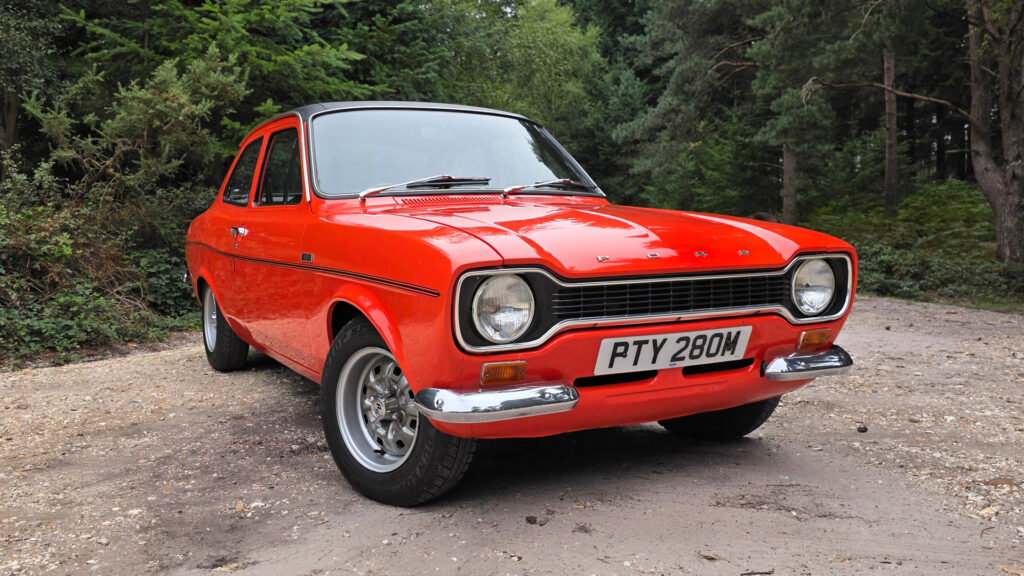
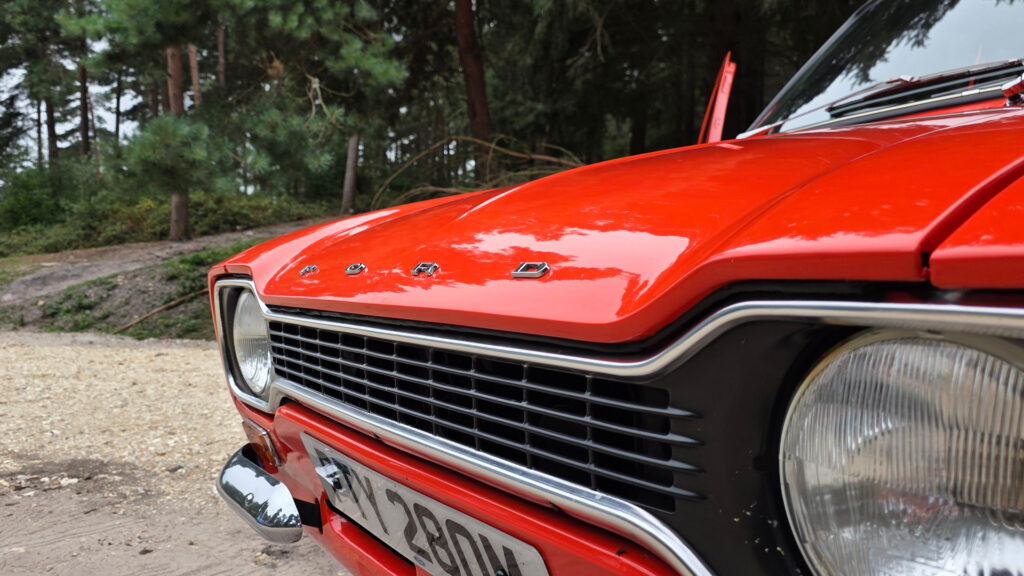
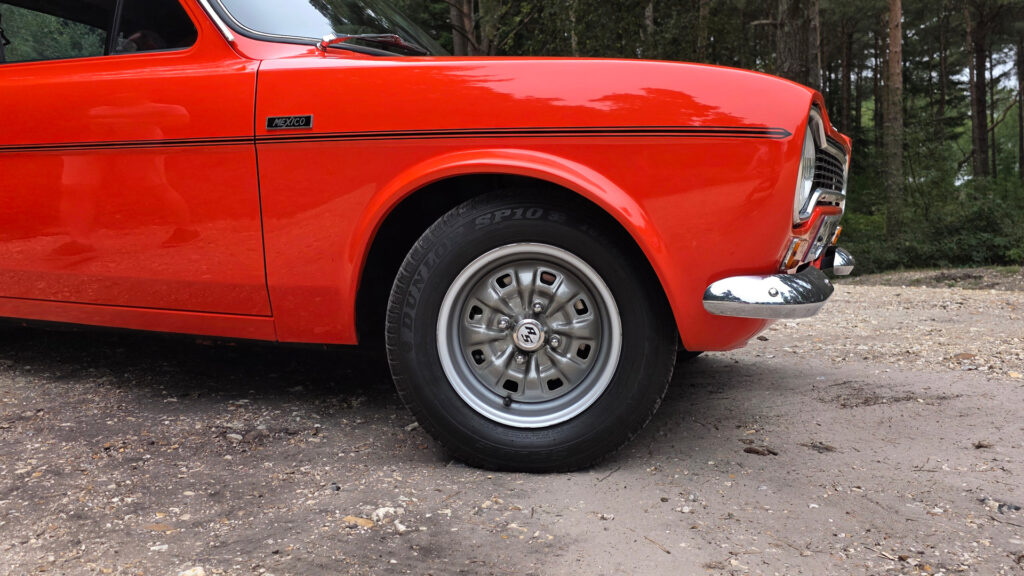
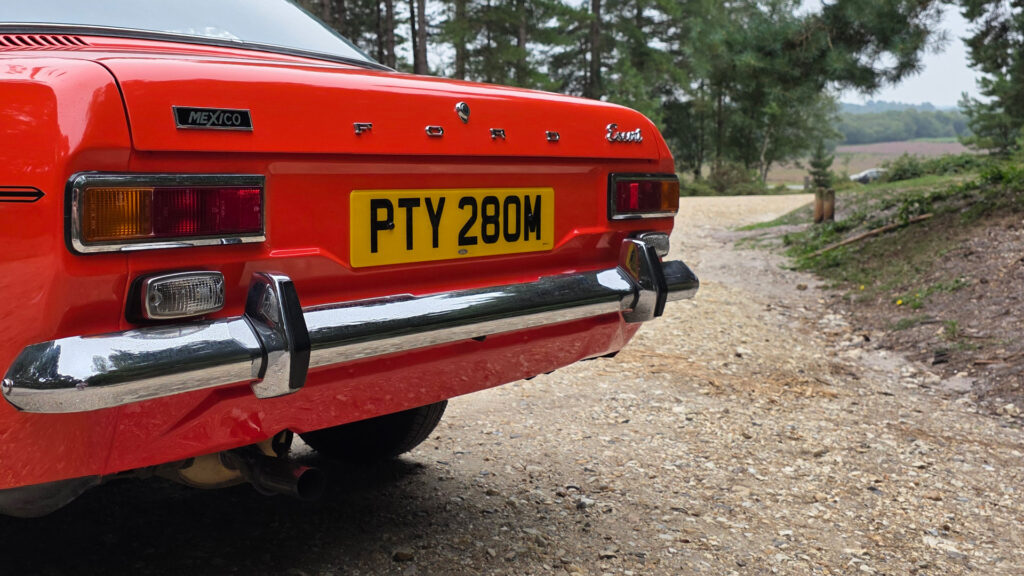
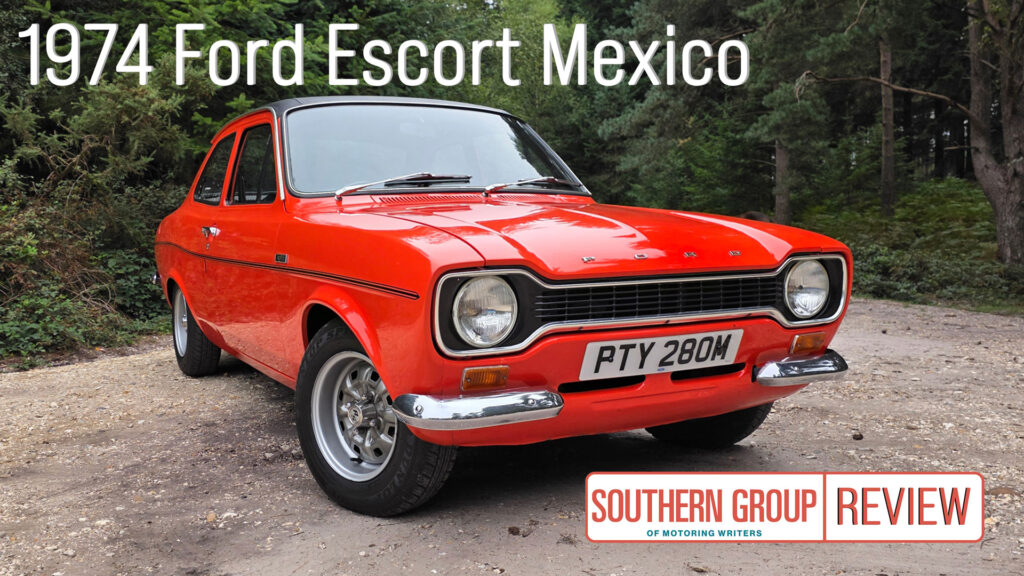
This cherished example first hit UK roads in May 1974, before being acquired for the Ford Heritage collection in 1987. Since it was first registered, it has only covered 25k miles, meaning it’s an absolute minter.

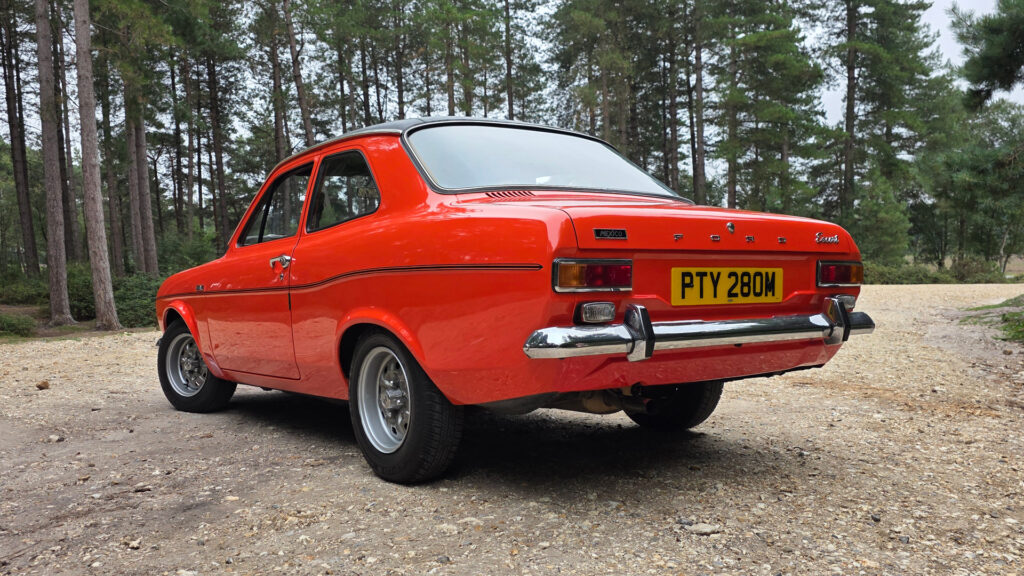
Finished in orange paint with a contrasting vinyl roof on the outside, the interior was optioned with the ‘Custom Pack’ from the factory, adding velour ‘RS’ seats and a matching steering wheel together with walnut trim on the dashboard.
So it’s a 50-year old car; does it drive like one?
So, with the knowledge that this Escort Mexico was a pristine example that was much beloved by the retired Ford techs who look after it, it was with some trepidation that I made my way onto the twisting and unforgiving roads of the South Downs. Would this 50-year old performance Ford do the very 1970s thing of trying to kill me with oversteer in the damp conditions? Or would it be a dream to drive?
Pleasingly, it was the latter, and very much so at that. On the move the 98bhp 1.6-litre engine has more than ample grunt to pull the sub-900kg body around via the rear-wheel drive setup. It’s not particularly fast by modern standards, but on the road the Mexico feels pacey and eager when accelerating and is more than fast enough to keep up with modern machinery in 2025. The throttle felt responsive, and while the maximum torque isn’t reached until around 4000rpm, the fact that it’s so light meant I rarely had to rev it out fully to make progress. Adding to the drivability is the four-speed manual gearbox, which felt a bit spongy at first, but once I’d mastered the length of the throw, quick gear changes were straightforward enough to achieve.
When presented with the more challenging roads, I found that the chassis and analogue steering setup gave it excellent poise through the corners, with the damping doing a decent job of soaking up the imperfections as well as keeping things under control. Accuracy is the big takeaway here, as with a width measurement of a smidge under 1.6 metres, the chassis and steering make it easy to place it on the road with accuracy. It’s fun too, with a level of involvement requiring you to work to get the best out of it. One that left me grinning while driving it.
Yes, the Escort Mexico is a bit basic and analogue, but that’s a good thing. There is no ABS or electronic driver aids to stop you from crashing; it is just the driver, the car, a tiny bit of rubber making contact with the tarmac, and that’s it.
A vintage cabin without distraction
Simplicity is the key to the cabin here. All you get is a pair of comfy sporty seats, a very cool three-spoke ‘RS’ badged steering, and all the essential dials you’ll ever need. While there was a slot for a radio, undoubtedly a luxury in 1974, it was missing from this example.
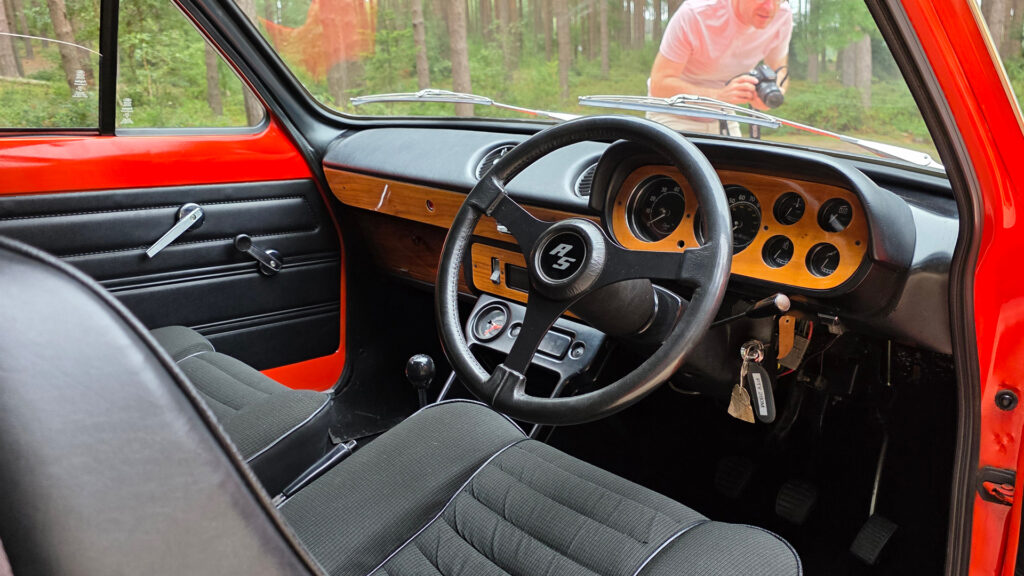
From the driver’s seat everything is sensibly laid out, with the all-important rev counter and speedo being easy to read. The remainder of the interior is one huge throwback to the 1970s, with a mix of real walnut trim on the dash, a minimal amount of switches for the heater controls, a clock, and not a lot else. All gloriously simple and straightforward.
Verdict: a wonderful throwback to when fast cars were simple
Never meet your heroes they say, but whoever they are, they are wrong. Purely by the way it drives, the Escort Mexico gives you a real sense of how Ford has become so good at producing accessible performance models for the masses. As with this car, this is where it really started, as for me at least, it represents genesis for all of the fast Fords that followed.
On the road, this 50-year old legend feels far younger than its number plate suggests, with a poise and balance that make it a great driver’s car. The complete lack of safety technology and distraction in the cabin is a plus as well, resulting in a connected driving experience that is rarely experienced today. Making it a car that lives up to the legendary nameplate, one that is (in this writer’s view) one of the all-time automotive greats.
1974 Ford Escort Mexico: gallery