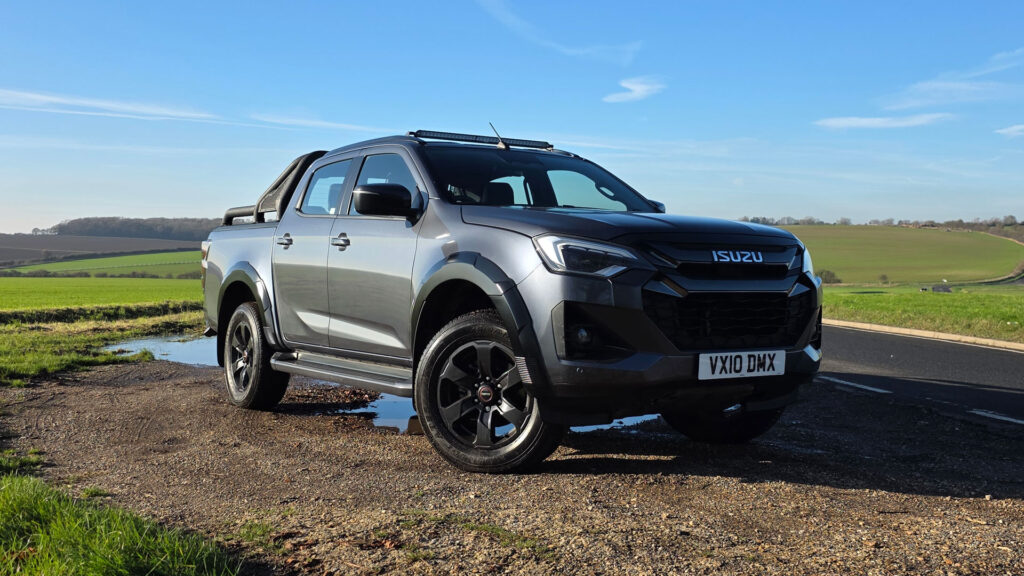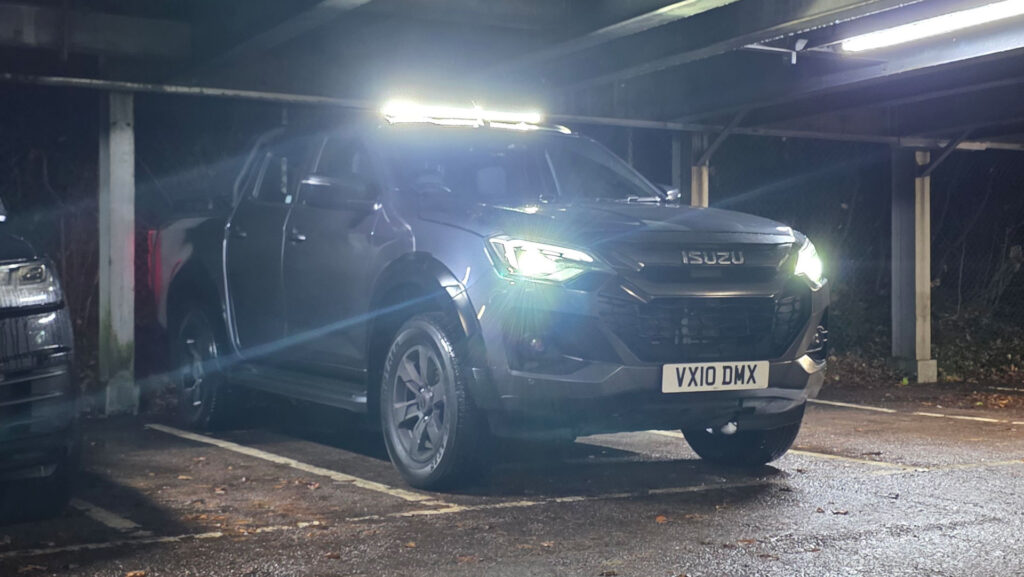
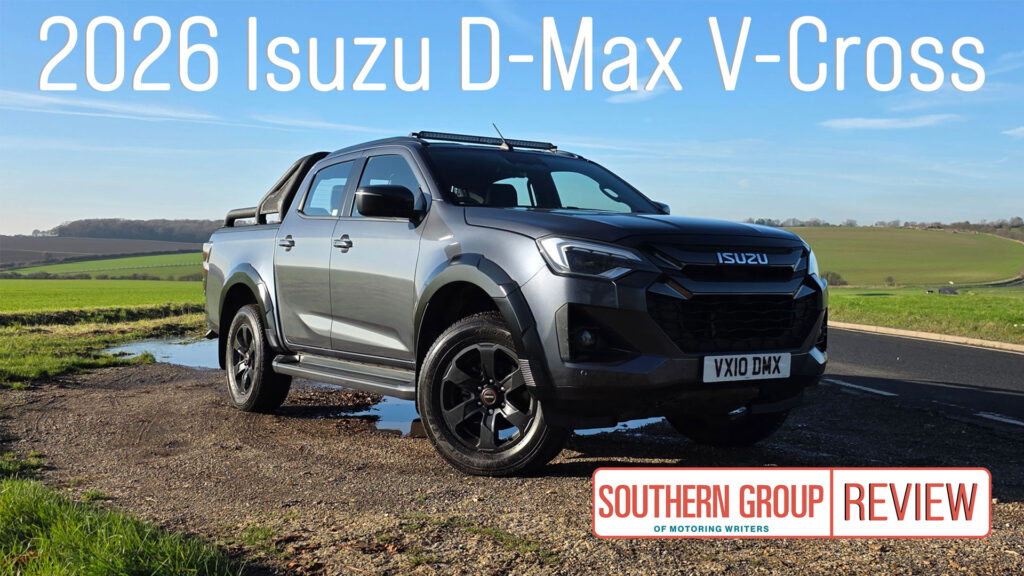
Pickup trucks are the equivalent of the Swiss Army Knife when compared to a regular car. Whether you want to drive an off-road trail, carry all of the things, tow a boat, or carry the family, they are set up to do it all. The Isuzu D-Max V-Cross is a great example of this ‘do it all’ mantra, as a rugged go (almost) anywhere vehicle that also has considerable commercial chops and ample luxuries onboard to make it a competent family hauler.
Isuzu D-Max V-Cross: what’s new?
The D-Max range received a light update in early 2025, with a new front camera system boasting a wider field of view than before. According to Isuzu, both the lane assist and speed sign recognition have been upgraded, helping the D-Max to see other vehicles quicker than before.
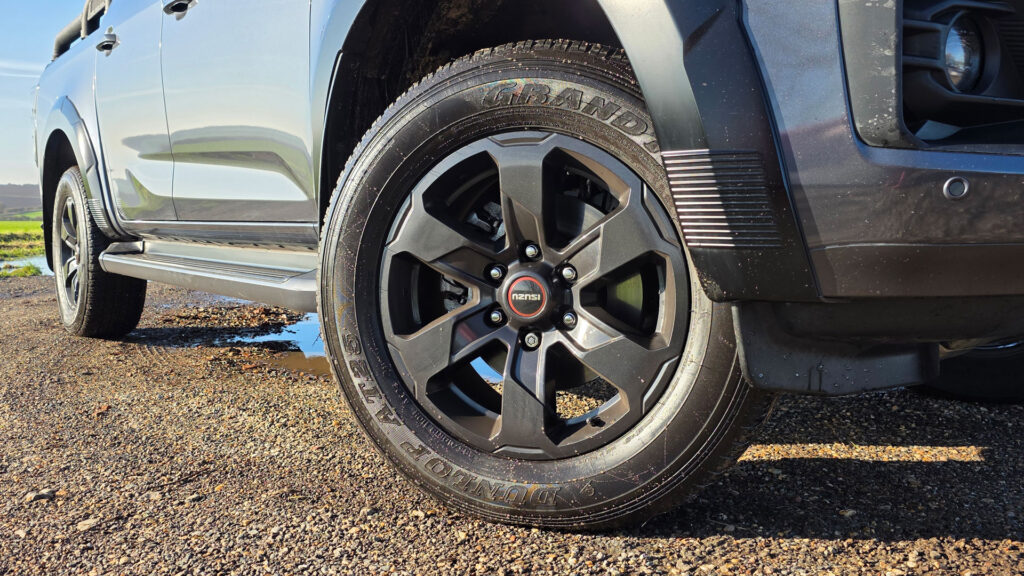
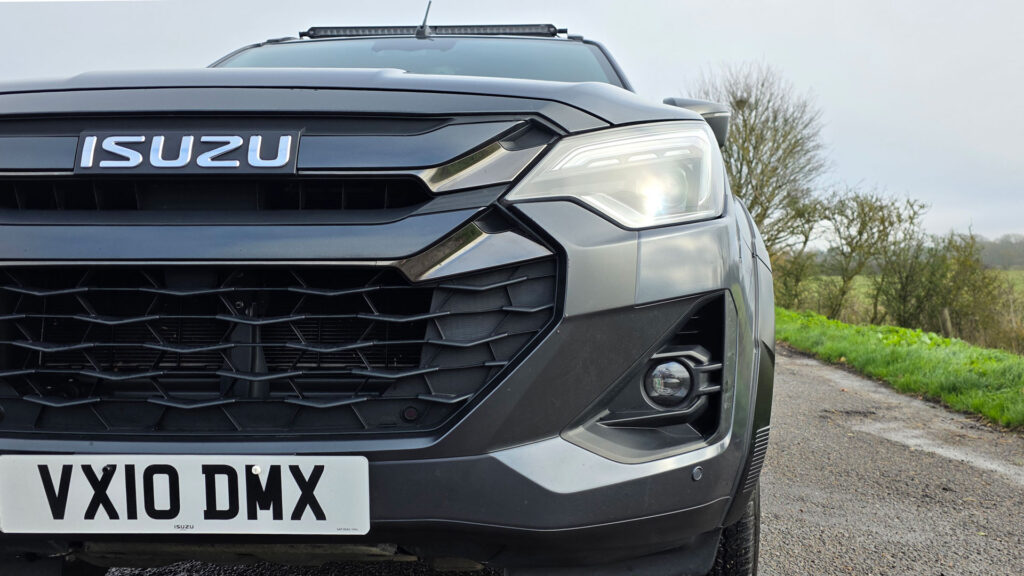
Part of this update included a minor cosmetic makeover with a restyled bonnet, front bumper, new headlights, and a new alloy wheel design. Inside, there’s an updated infotainment screen with new software. A new automatic gearbox was also introduced, which is capable of 25% quicker gear changes than the old unit according to Isuzu.
A new off-road driving setup was also added. Called Rough Terrain mode, this setup makes the D-Max more capable on muddy tracks and in icy and snowy conditions.
What about the specs and rivals?
Underneath the D-Max’s refreshed design sits a ladder-frame chassis, a refreshingly old-school setup – as if it works – why change it, right? Power comes from a 162bhp 1.9-litre turbocharged diesel engine, which produces 360Nm of torque. In V-Cross spec, power goes to all four wheels via either a standard six-speed manual box or an optional automatic, with the latter specced in our test car, along with a switchable drive system that allows you to run in rear-wheel drive for normal road use.
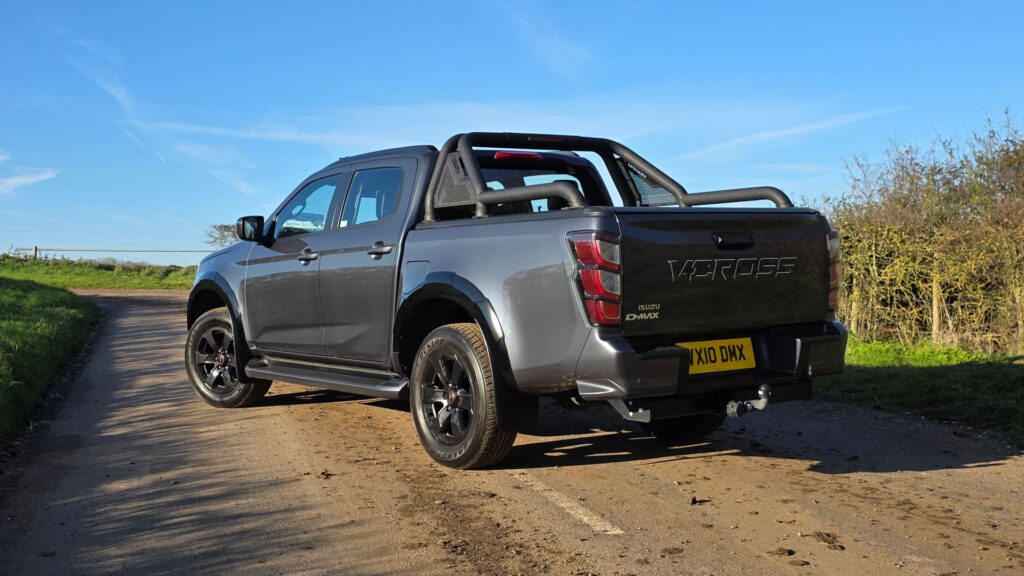
The top spec V-Cross has a long list of standard equipment onboard as well. Highlights include 18-inch alloy wheels, Bi-LED headlights, and folding mirrors. Inside, there’s a refreshingly unobtrusive 9-inch infotainment screen, along with such niceties as leather-trimmed seats, front heated seats, wireless Apple CarPlay and Android Auto, a litany of USB ports, and a comprehensive suite of safety tech.
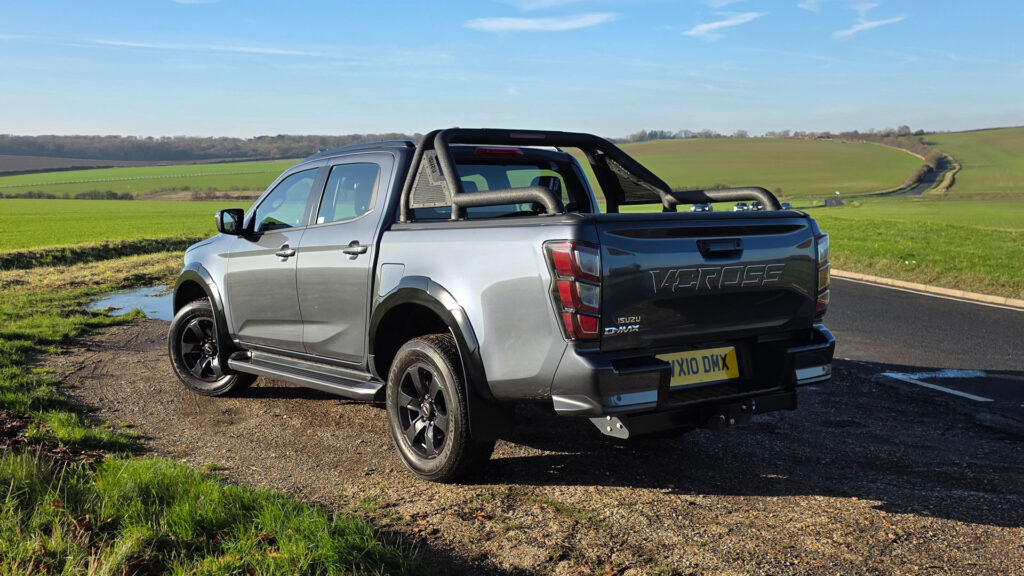
The towing and load figures are competitive, too, with a 3.5-tonne braked towing capacity and a 1085kg payload capability when specced with an automatic gearbox. Opt for the manual, and the payload increases to 1105kg.
Direct rivals include the Ford Ranger, the Volkswagen Amarok, and the Toyota Hilux. Which all offer the same towing capacity and very similar payload specs in their higher double cab models.
Is it good at pickup things?
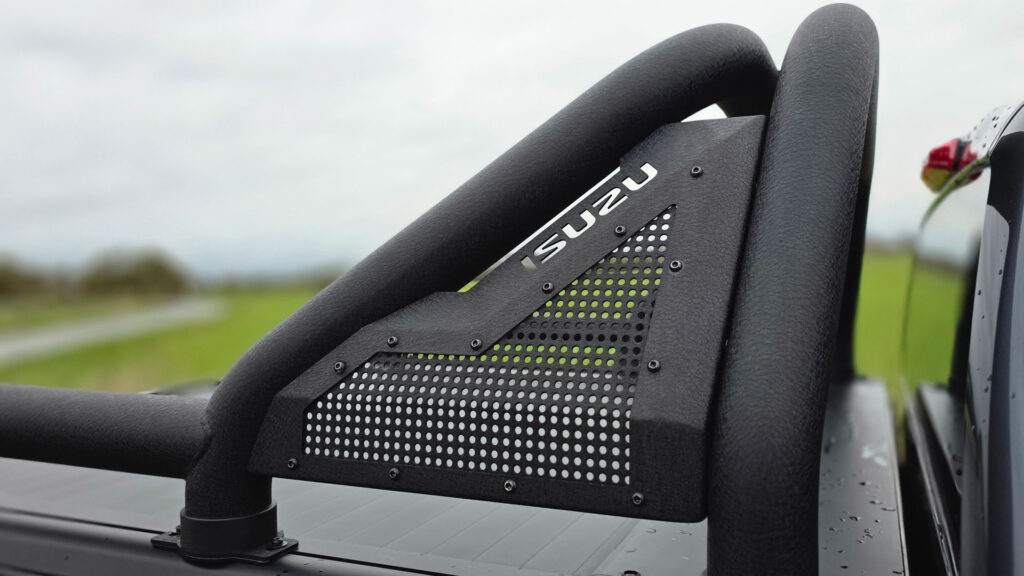
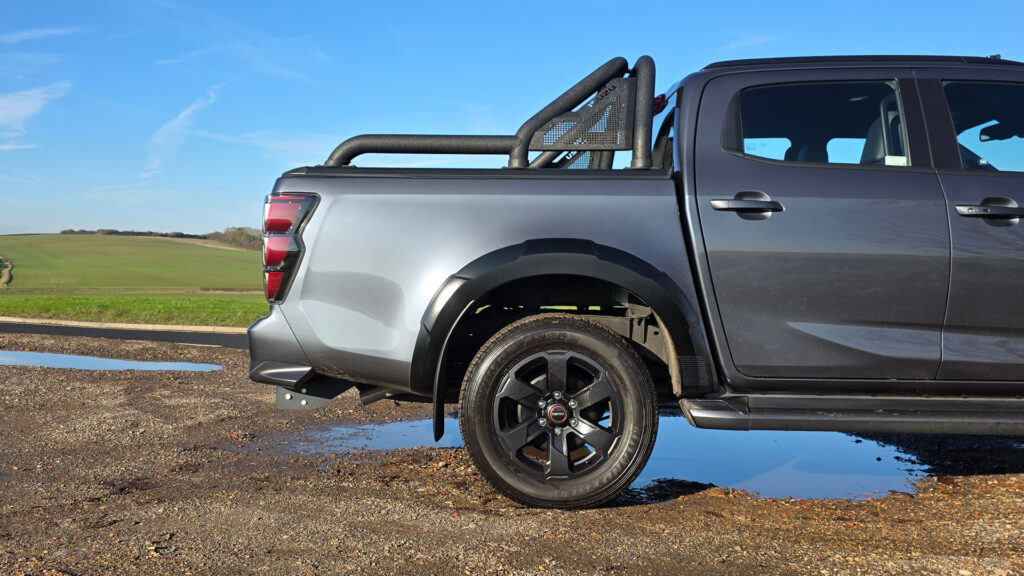
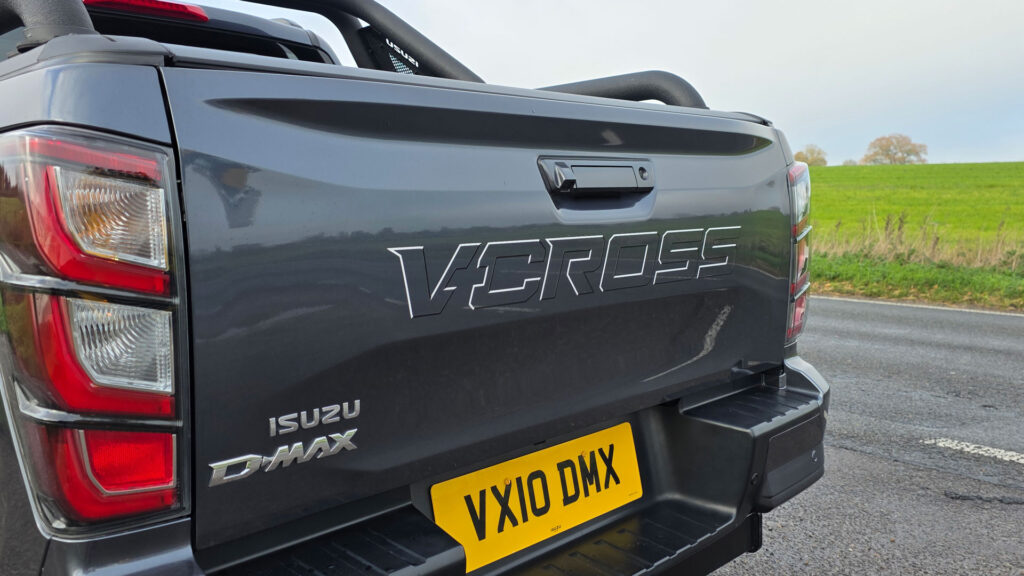
Yes, the vast load bed is cavernous. Want to do a tip run? Well, the D-Max has you covered with the rear bed measuring in at 1520mm long by 1530mm wide, meaning it is capable of swallowing vast amounts of cargo and things. Access is also easy thanks to a powered metal tonneau cover, which retracts at the touch of a button.
While we stayed away from any serious off-road routes, we did take the D-Max on some light private green lanes where it made light work of them. Once four-wheel drive and Rough Terrain mode are selected, it simply marches onwards making light work of any terrain in its path. Off-road the auto box made it simple to keep going, as it’s a case of managing the throttle while the gearbox and drivetrain systems sort it all out for you ensuring there is minimal loss of traction for quick progress.
But it’s a pickup, surely it cannot match a car for refinement?
Given its workhorse-like design, it’s fair to say that the D-Max cannot match a regular car when it comes to refinement. As soon as you fire up the engine, there is no doubt that it’s diesel powered, with a fair amount of clatter making its way through to the cabin.
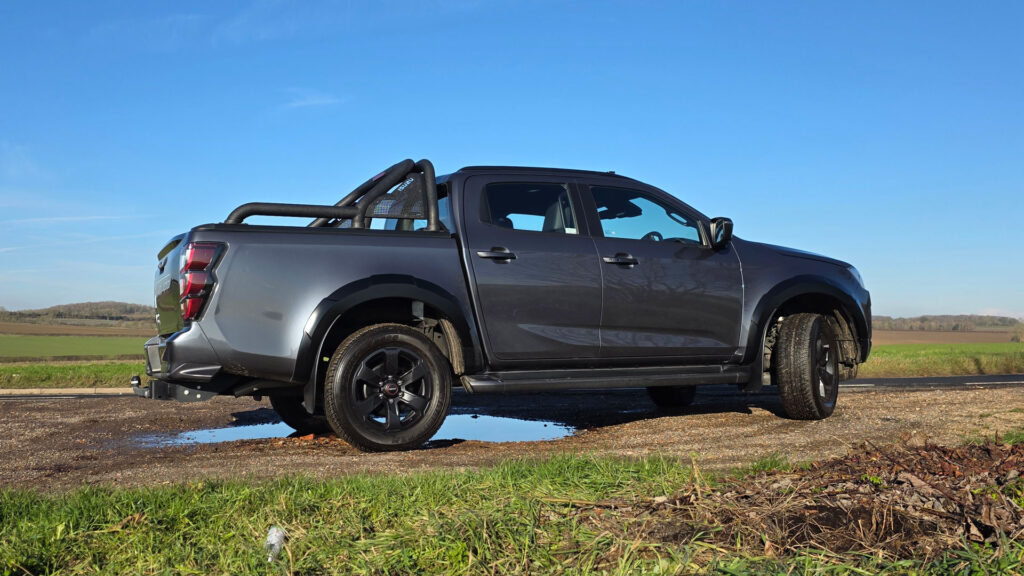
However, once the engine is warmed up, it quietens down. On the move, it’s obvious you’re driving a diesel, but refinement is good overall for a commercial vehicle. The suspension damping is competent enough on minor imperfections, but on rougher surfaces it does crash and thud a fair bit, with larger bumps making their way through to the cabin. Again, not entirely unexpected for a vehicle of this type.
What about the interior?
The leather-trimmed seats are both comfortable and supportive, with a wide array of adjustment, and the heated seats were useful in the cold weather experienced during our test. Overall, the cabin’s logical layout makes it simple to operate while on the move. This ease of use is aided by the chunky physical buttons used to activate all the regular functions you need, together with a good-sized infotainment screen which is easy to read and operate. A refreshing change from rival models that have done away with buttons in favour of a vast tablet-sized screen on the dashboard.
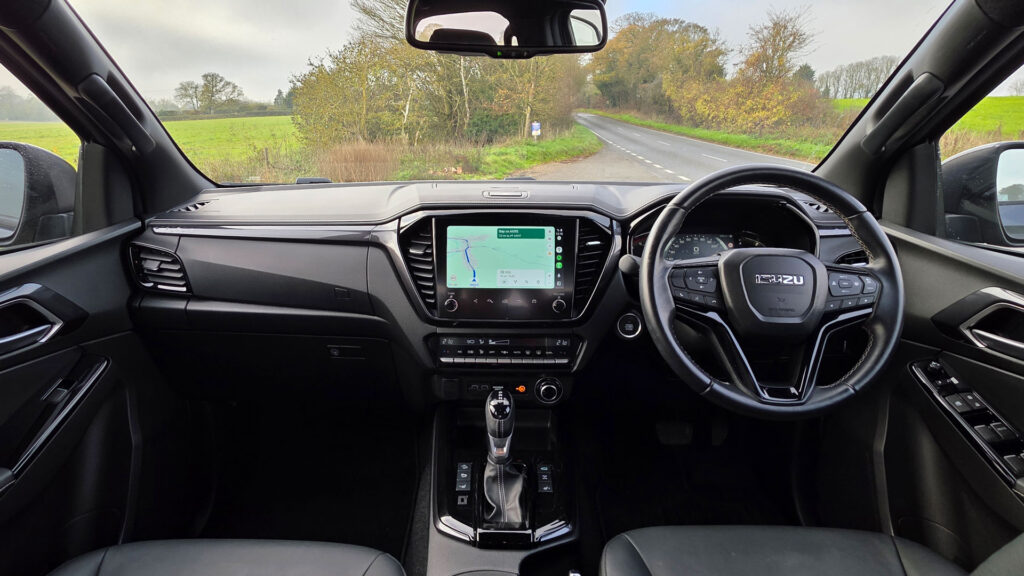
The cabin feels ruggedly constructed with good-quality materials throughout. There were very few squeaks or rattles on our test truck, and overall, the inside of a D-Max is a comfortable place to spend time.
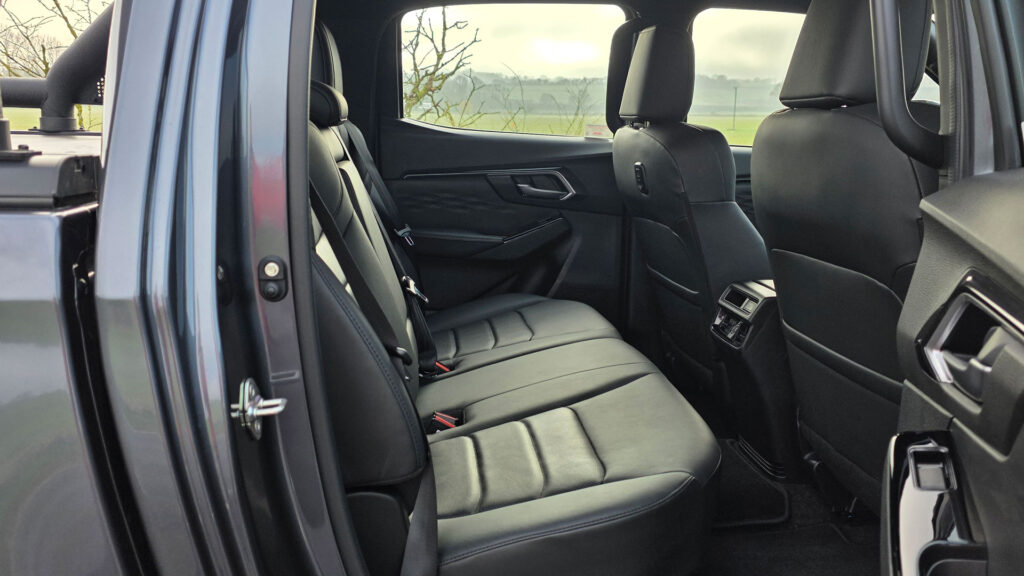
There’s masses of space inside as well, enough to accommodate even the tallest of people in the front. It’s the same story in the rear seats, with ample space for adults and children.
Does it drive like a truck?
Obviously, yes. But this is no bad thing. The 1.9-litre diesel engine delivers a good torque spread from low down the rev range, giving you plenty of pulling power from the off. The optional six-speed auto box shifts seamlessly with a quick kick-down, too, making it easy to progress on the road with minimal fuss.
It’s not fast, with 0-62mph taking 13 seconds, but it never feels underpowered. Acceleration is quick enough, with plenty of pulling power available to make getting up to speed on faster roads an easy task.
It drives competently, too. While the steering lacks feeling like most modern cars, it is accurate enough. The handling is what you’d expect for such a large and high-up vehicle with a somewhat lazy feel to it. Yes, the D-Max cannot match the car-like driving dynamics of the class-leading Ford Ranger, but its chassis setup makes it feel secure and capable on the road.
One minor point was the safety systems. At times these were overbearing, resulting in false alerts. Particularly the front AEB system, which detected a few phantom crash hazards when the road in front was completely clear. Also, the tiredness monitor would ping on occasions minutes after starting a journey. More slight annoyances than anything.
But can really use a D-Max to ‘do it all?’
Pretty much, so long as you’re adept at parking. The D-Max measures in at 5280mm long by 1870mm wide, making it a bit of a behemoth. Meaning that parking on paper at least, is a bit like trying to steer the Ever Given down the Suez Canal. However, parking it is made easier by the litany of cameras and sensors dotted around the bodywork. Meaning that with a bit of patience, parking the D-Max is straightforward enough. Notably, it sits at 1790mm tall, which is low enough to fit into most normal multi-storey car parks.
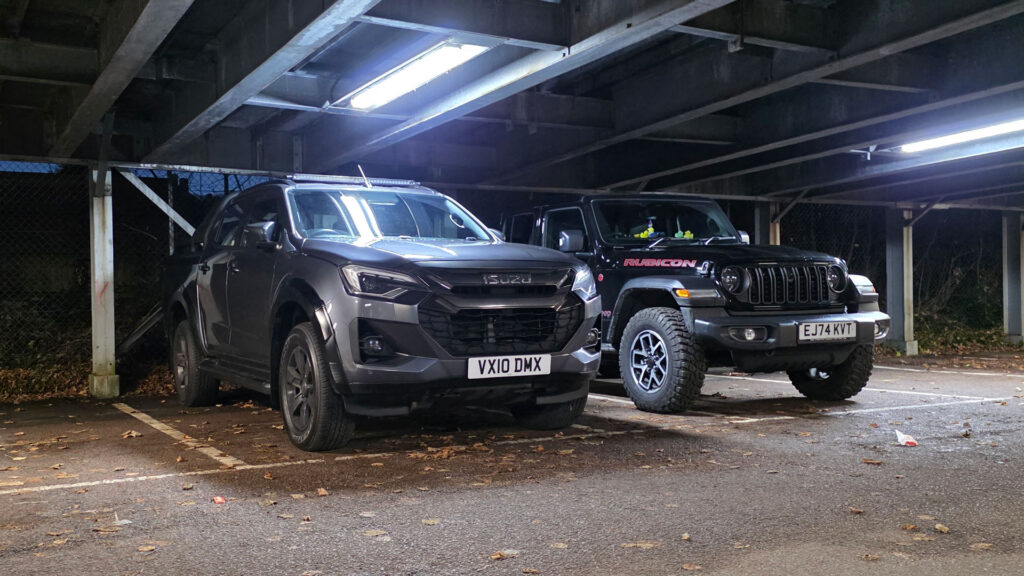
Given its vast dimensions and 2015kg kerbweight figure, you’d be forgiven for thinking that fuel economy would be an issue. Here, we were pleasantly surprised, returning a figure of 34.9mpg achieved after a week of careful motorway and urban driving. A number that beats the official combined economy figure of 31.4mpg by a small margin.
Will it be reliable?
Isuzu offers the D-Max with a standard five-year/125,000-mile warranty complete with UK/EU roadside assistance. The Volkswagen Amarok gets an identical length warranty period with 124,000 miles of coverage, while the Ford Ranger sits behind its rivals with only three years and 60,000 miles of coverage.
Additionally, the D-Max’s turbocharged 1.9-litre diesel engine features a steel timing chain, which Isuzu says is better for durability and longevity and is part of the brand’s commitment to making their vehicles reliable. Compare this to the rival Ford and Volkswagen models which feature a wetbelt (a cambelt housed in oil) that is known to be a weak point that is very expensive to fix. The fact that Isuzu has kept their powertrain simple is another plus point for the D-Max.
Verdict: A pickup that can really do it all
Want a rugged go-anywhere-and-do-anything pickup? Isuzu has nailed the brief completely. While it is true the D-Max is down on power compared to some rivals, it more than makes up for it with a strong dual capability consisting of copious amounts of rugged ability mixed with decent on-road manners that make it a usable and practical daily driver fulfilling the ‘do it all’ mantra.
Adding to its appeal is the extensive warranty and Isuzu’s commitment to making it reliable, along with the well-specced cabin that features usable rather than overwhelming tech, along with all of the niceties you’ll ever need.
For the £40,800 starting price when equipped with the optional auto box (subject to 20% VAT), the D-Max V-Cross is a strong all-round performer that’s as equally capable as its direct rivals from Ford, Toyota, and Volkswagen.
2026 Isuzu D-Max V-Cross test: full gallery