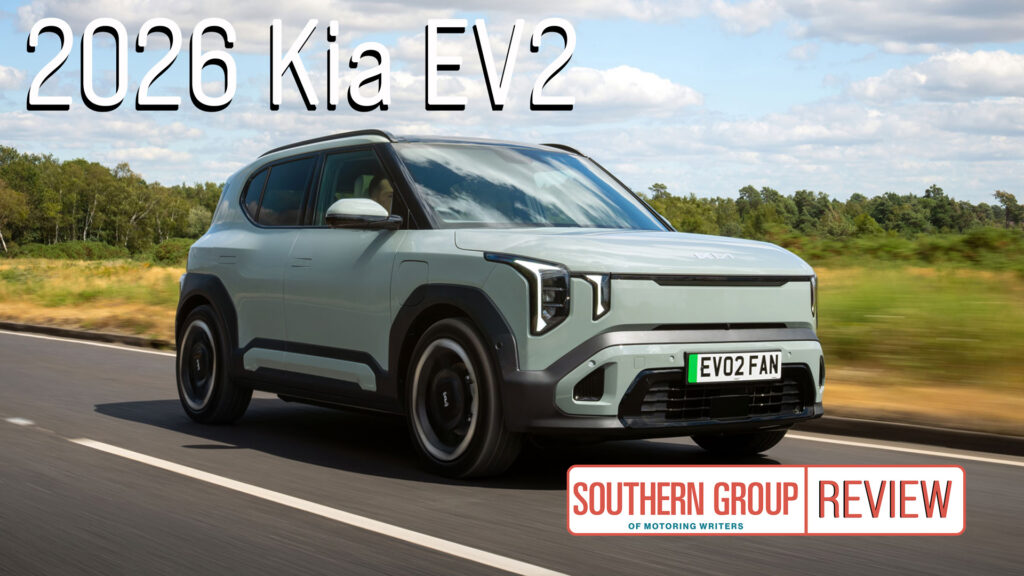
The compact electric car market is growing and Kia is entering this fiercely competitive segment with its new baby offering – the EV2.
The EV2 is Kia’s smallest EV to date and is going up against the Ford Puma Gen-E and Citroen e-C3, providing funky looks, efficient powertrains and a practical interior.
So, has Kia struck gold with the EV2 and produced a class-leader, or is it just another compact electric SUV?
Updates
The biggest change in the EV2 range is what’s sitting underneath – a new Long-Range 61kWh battery pack, which promises a better range and gives more choice within the EV2’s model line-up.
Its exterior features Kia’s latest ‘Opposites United’ design language, while it sits on the firm’s ‘E-GMP’ platform which uses a 400-volt architecture to enable ultra-rapid charging.
Engines and transmissions
Underneath, the EV2 is available with two battery packs: a 42.2kWh Standard-Range and a 61kWh Long-Range setup.
We’re driving the larger 61kWh unit that is hooked up to a single electric motor and produces 133bhp and 250Nm of torque. It can sprint to 60mph in 9.5 seconds and will go onto a top speed of 100mph.
In terms of range, Kia claims that the 61kWh model can achieve up to 261 miles between charges and can be topped up at speeds of 118kW from a DC charger, going from 10 to 80 per cent in 30 minutes.
The smaller 42.2kWh Standard-Range car produces 143bhp and the same 250Nm of torque, while 0-60mph takes 8.5 seconds and tops out at 100mph. This model can achieve a claimed 197 miles between trips to the plug and is also compatible with 118kW DC charging speeds.
Driving experience
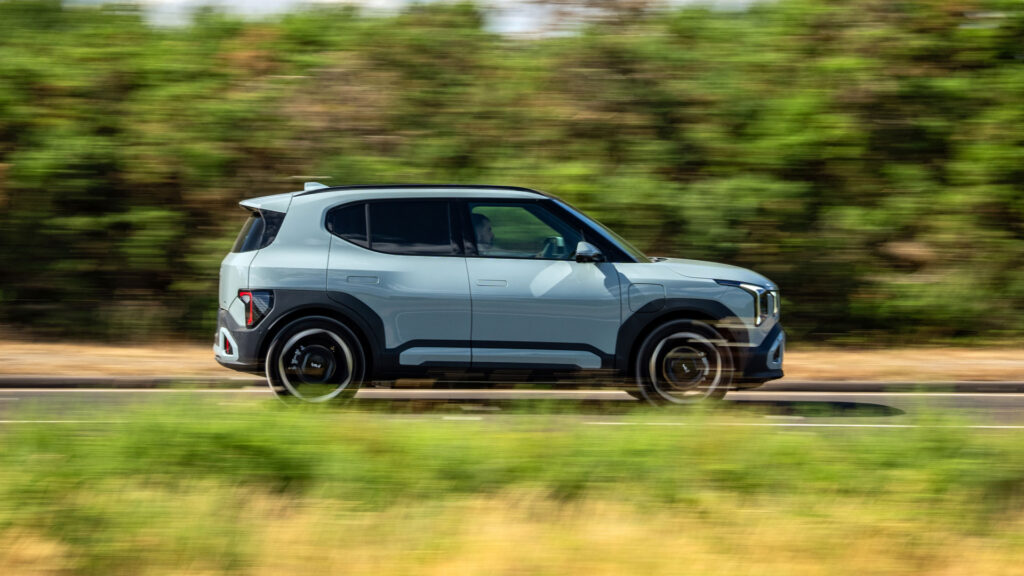
Behind the wheel, the EV2 feels at home in and around town thanks to its light steering and compact dimensions.
Its tight 10.3-metre turning circle makes manoeuvring a breeze and the car’s steering wheel-mounted paddles allow you to control the different strengths of regenerative braking, with ‘i-Pedal’ mode enabling the car to come to a complete stop without touching the brakes – perfect for stop-start city driving.
Around the twisty bits, the sharp handling and limited body lean makes it feel agile and eager, though the numb steering feel does rob a bit of driver engagement. The ride is composed enough, but the chassis does get upset over larger imperfections which is due to our test car’s 19-inch alloy wheels.
Over a 48-mile round trip, the EV2 averaged 4.0 miles per kWh, which works out to be a real-world range of 244 miles – just 17 miles off the manufacturer’s official claimed figure.
Looks
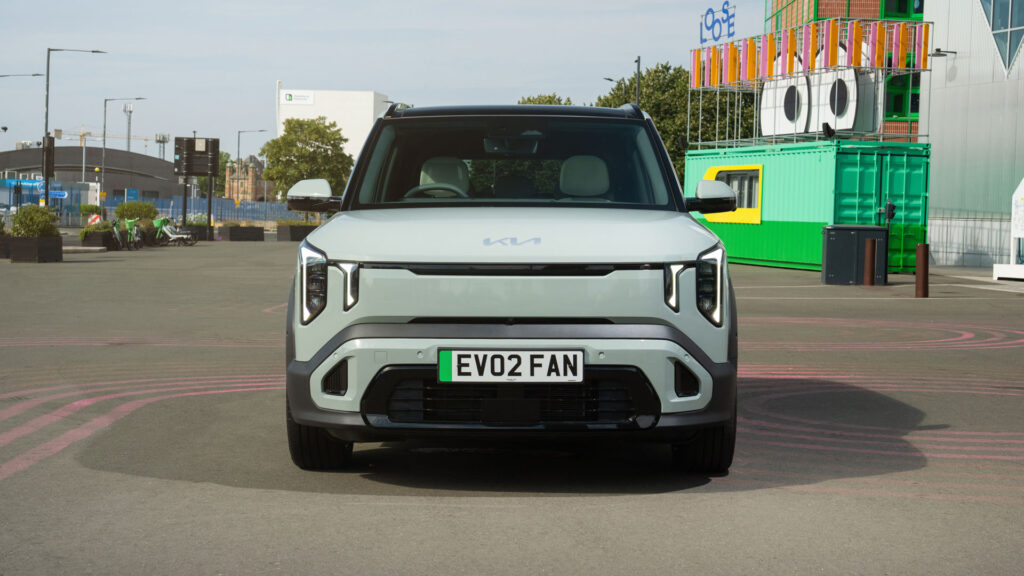
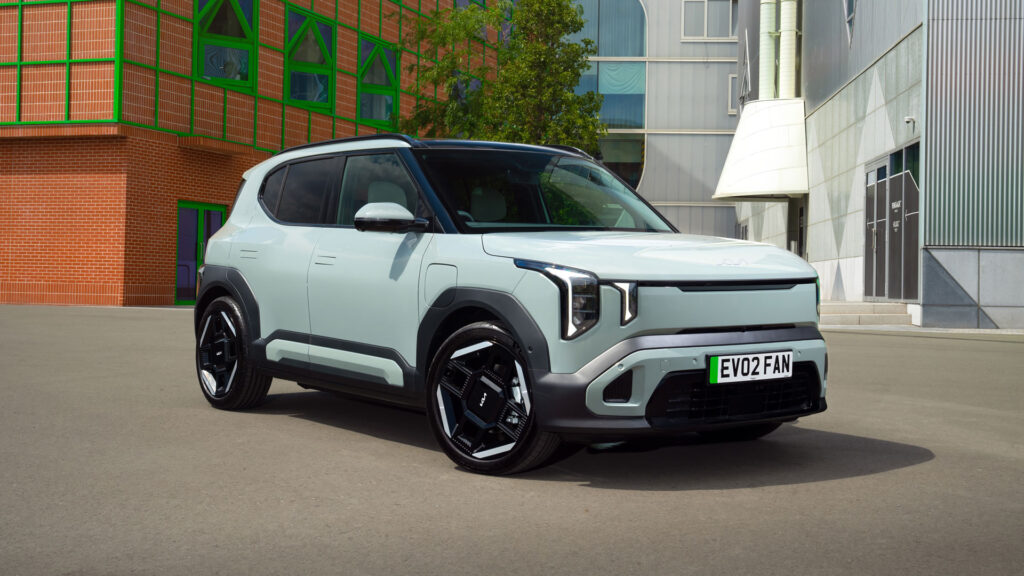
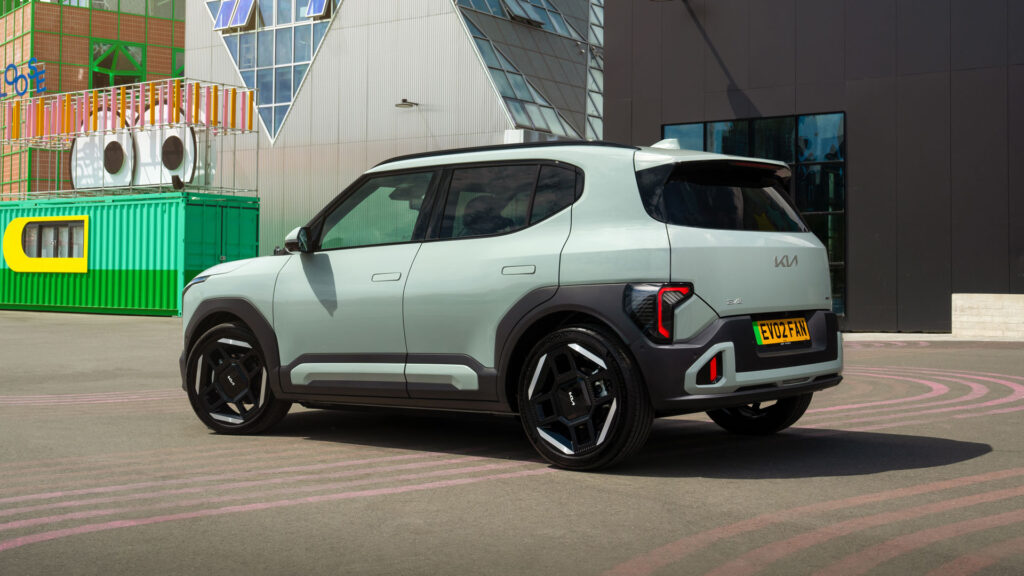
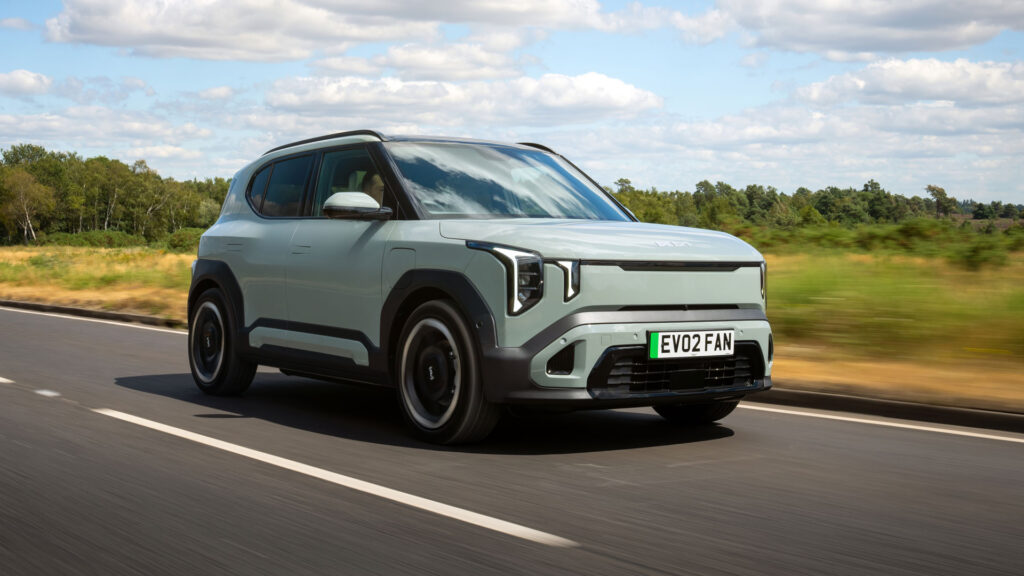
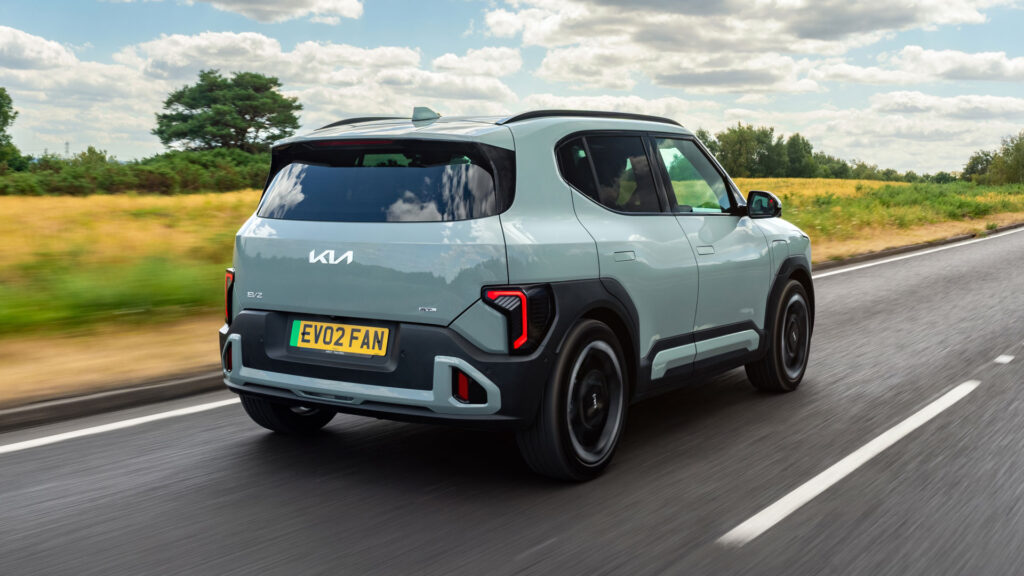
Thanks to the EV2 incorporating Kia’s ‘Opposites United’ design language, it has a bubbly and characterful charm.
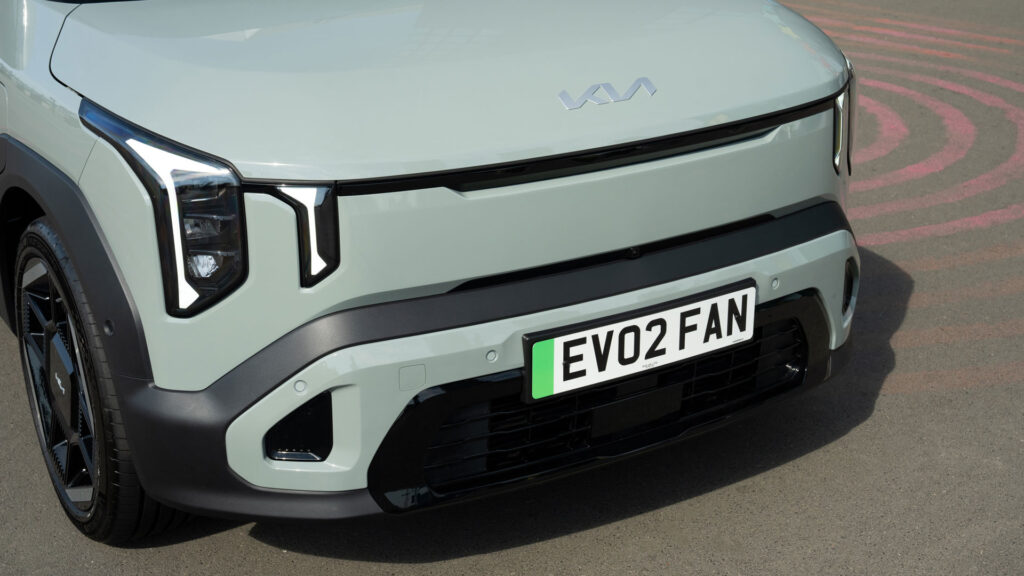
At the front, there are slim vertical headlights and a clam shell-style bonnet design, while the square-shaped wheel arches and chunky lower-body mouldings give it its SUV identity.
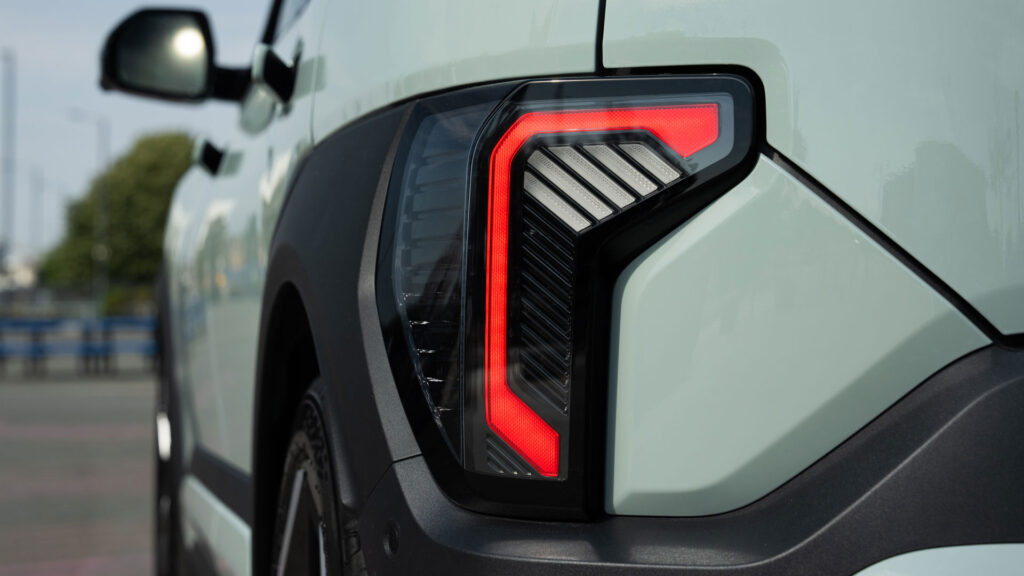
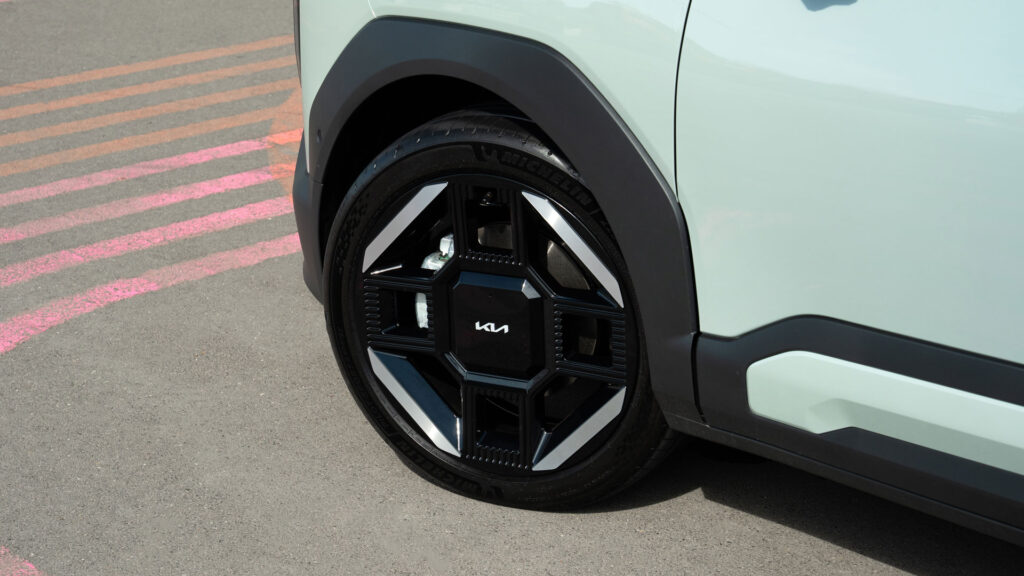
Around the back, the rear taillights have been pushed out into the corners of the car and are also vertically shaped, while our GT-Line test car complements the exterior design with diamond-cut alloy wheels and gloss black roof bars.
Interior and practicality
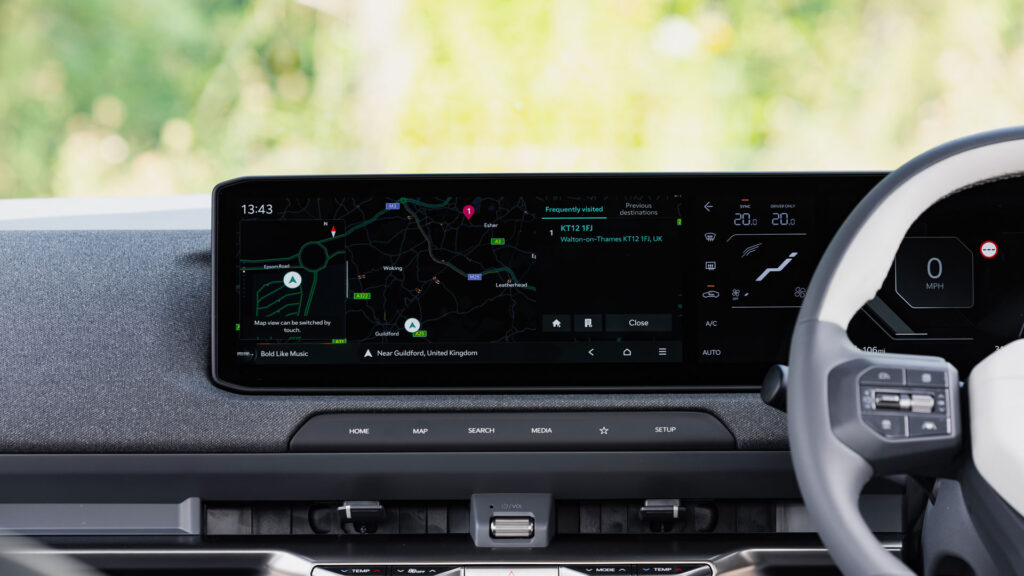
If you’re familiar with Kia’s new EV dashboard layout, the EV2 carries over this design with its triple screen layout, and great blend of physical and haptic feedback controls.
There are dual 12.3-inch screens that house the digital instrument cluster and infotainment screen, while a 5.3-inch climate control display sits between them, though is obscured by your hand as you drive along.
The cabin is logically laid out, yet the touch-sensitive buttons located under the infotainment screen can be easily pressed when navigating your way through the touchscreen, plus all of the materials used throughout are hard and brittle. On the bright side, there are some little ‘have a nice day’ motifs located inside the door handles which gives the interior a friendly ambience.
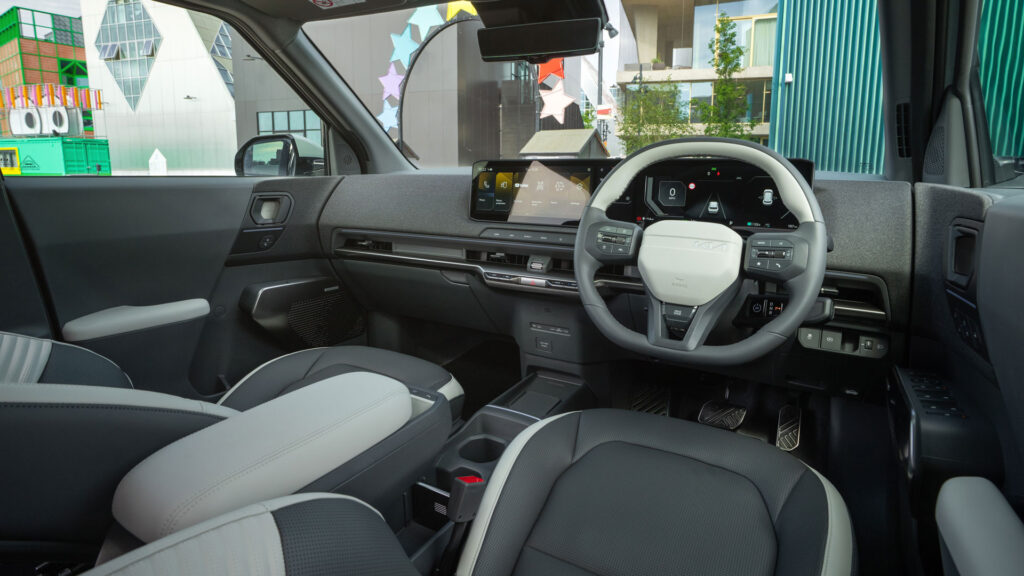
In terms of practicality, there are lots of handy storage solutions dotted about the cabin with a glovebox, front and rear cup holders, a centre storage area under the armrest, large front and rear door bins, an aeroplane-style rear seatback pocket, a wireless phone charge and a centre rear armrest with additional storage and cup holders.
In the back, the rear doors open wide, while the tall body gives average-sized adults plenty of head, leg and elbow room. The flat floor makes it more comfortable for a middle-seat passenger to sit comfortably, it’s just a shame that the centre console protrudes into the rear, pinching leg room to an extent.
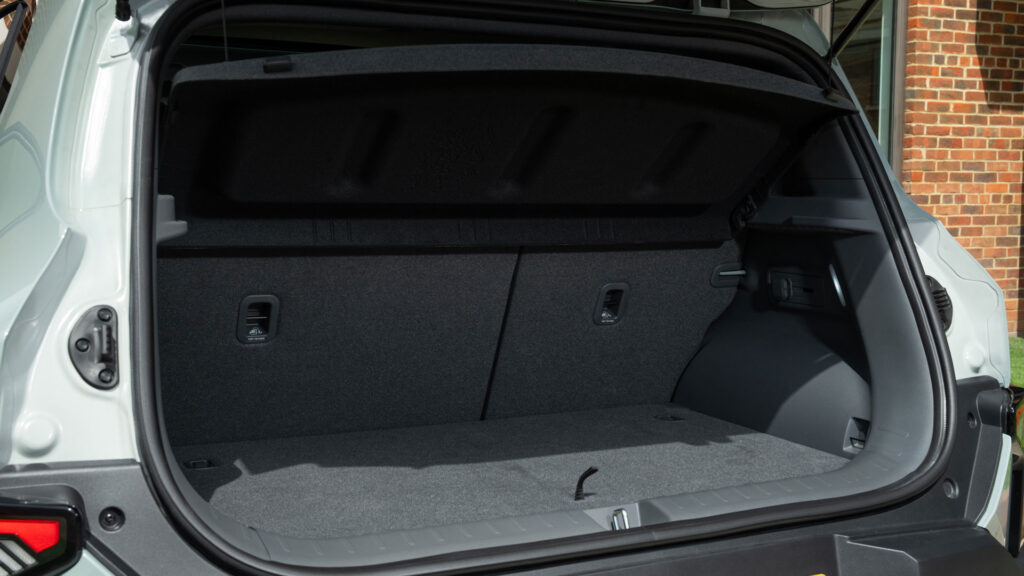
The EV2 provides a 362-litre boot capacity, which is 161 litres less than what you’ll find in a Ford Puma Gen-E but 52 litres more than in a Citroen e-C3. Fold the 60:40 split-folding rear bench down and that reveals a completely flat load bay and a 1,201-litre overall capacity, though the boot’s high load lip can make it difficult to lift heavier items into the back.
To boost flexibility, the EV2 also comes with an additional false boot floor and a 15-litre frunk.
Trim levels
The EV2 is available in four different trim levels: ‘Air’, First Edition, GT-Line and GT-Line S.
To make prices even more competitive, the 61kWh Long-Range car receives the maximum £3,750 government Electric Car Grant incentive, which means prices start at £24,245 for the entry-level car and rise to £32,595 for the range-topping GT-Line S.
Meanwhile, the 42.2kWh Standard-Range model receives a £1,500 price cut through the ECG, which takes the starting price down to £26,995.
‘Air’: The ‘Air’ is the entry-level model and comes with an impressive amount of standard kit including 16-inch alloy wheels, flush door handles, a six-speaker audio system and grey cloth upholstery.
First Edition: The First Edition is available for a limited time only and comes with the smaller 42.2kWh battery pack, while standard equipment includes 18-inch alloy wheels, LED headlights, an eight-speaker Harman Kardon premium sound system, a 15-litre frunk and a wireless smartphone charger.
GT-Line: This model adds sportier exterior and interior touches with its 19-inch alloy wheels, gloss black door mirrors, aluminium pedals, two-tone artificial leather upholstery and GT-Line exterior and interior details.
GT-Line S: The flagship model that boasts lots of extra toys with automatic flush door handles, ventilated front seats, a tilt and sliding glass sunroof, electrically adjustable front seats and ambient lighting.
Sadly, the top-spec GT-Line S is the only model available with a Vehicle-to-Load (V2L) function, which enables electrical appliances such as a microwave or coffee machine to be plugged in using the car’s battery pack. Furthermore, it’s the only model in the EV2 range to be available with an optional heat pump, which optimises efficiency of the battery pack in cooler temperatures.
Conclusion
Kia shouldn’t be worried about the thriving compact electric SUV market as the EV2 is one of the very best.
It’s good to drive, packs lots of interior space; it’s efficient, good looking and competitively priced to make this a great all-rounder. The steering feel isn’t the sharpest and some of the interior plastics could be plusher, but there’s no denying that Kia are onto a winner here with the EV2.
And now with the option of a larger 61kWh battery that can do nearly 250 miles in the real world, it just adds more appeal to this great little urban SUV.
Rating: 8/10
FUN FACT
‘Measuring at 4.06 metres in length, the EV2 is Kia’s smallest electric car built for European markets.‘
2026 Kia EV2: Everything you need to know
Model tested: Kia EV2 GT-Line 61kWh Long-Range
Price of test car: £29,645 (including ECG)
Engine: 61kWh battery with single electric motor
Power: 133bhp
Torque: 250Nm
0-60mph: 9.5 seconds
Top speed: 100mph
Efficiency as tested: 4.0 miles per kWh (244 miles real-world range)
CO2 emissions: 0g/km
Claimed electric range: 261 miles
Maximum charging speed: 118kW
Full Gallery: